What speaker diarization is
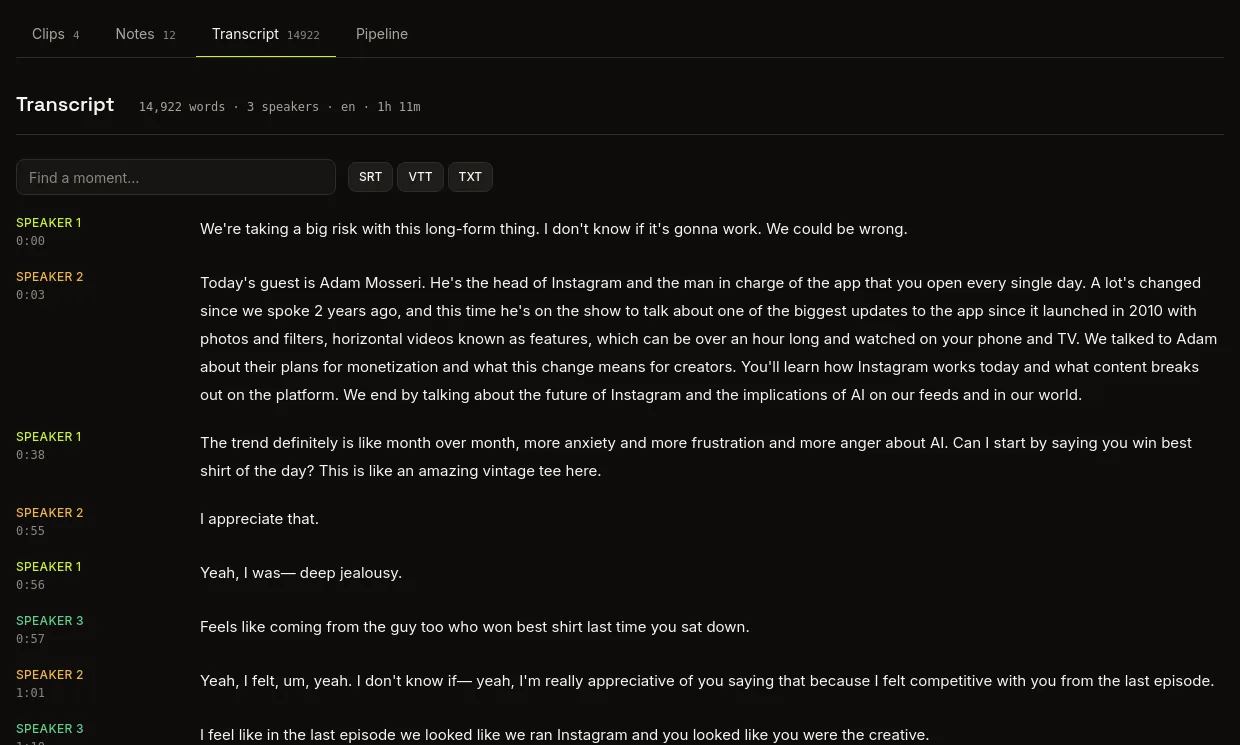
Diarization splits a recording by voice, so the transcript knows when the speaker changes. It labels voices; it does not know names.
How CastKit does it
Voices become labels
Turns become structure
It powers framing
In CastKit
What this will not do
Similar voices, or two people talking at once, can be merged. Thai, Khmer and Burmese episodes come back without speaker labels.
Questions
- Does it know names?
- Does it need video?
- Why is one person two speakers?
Try it on your own episode
Paste a link. The first episode runs the whole pipeline for nothing, needs no card, and exports every clip in 1080p with a small CastKit mark.