Transcribe audio and video with speaker labels
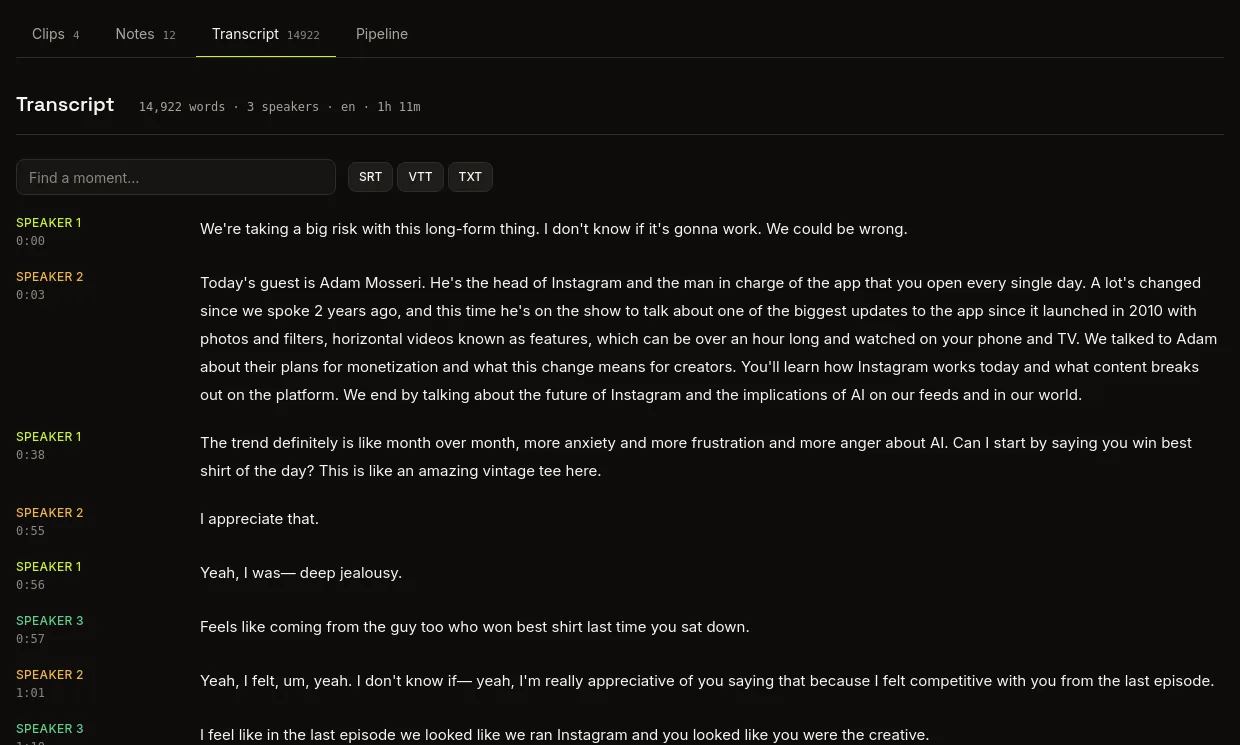
A transcript of a conversation without speakers is a wall of text. CastKit labels the speaker of every word, groups the text into turns by who is talking, and keeps the labels in the export: each line of the TXT starts with its speaker, and SRT and VTT blocks break where the speaker changes.
How CastKit does it
Paste the episode
Transcribed by speaker
Check the turns
Download
What this will not do
Speakers are labelled, not named: CastKit tells voices apart, it does not know who they are, so replace the labels with names in the file. Two people with very similar voices, or talking over each other, can be merged into one speaker.
Questions
- Does it name the speakers?
- How many speakers?
- Which formats keep the speakers?
Try it on your own episode
Paste a link. The first episode runs the whole pipeline for nothing, needs no card, and exports every clip in 1080p with a small CastKit mark.